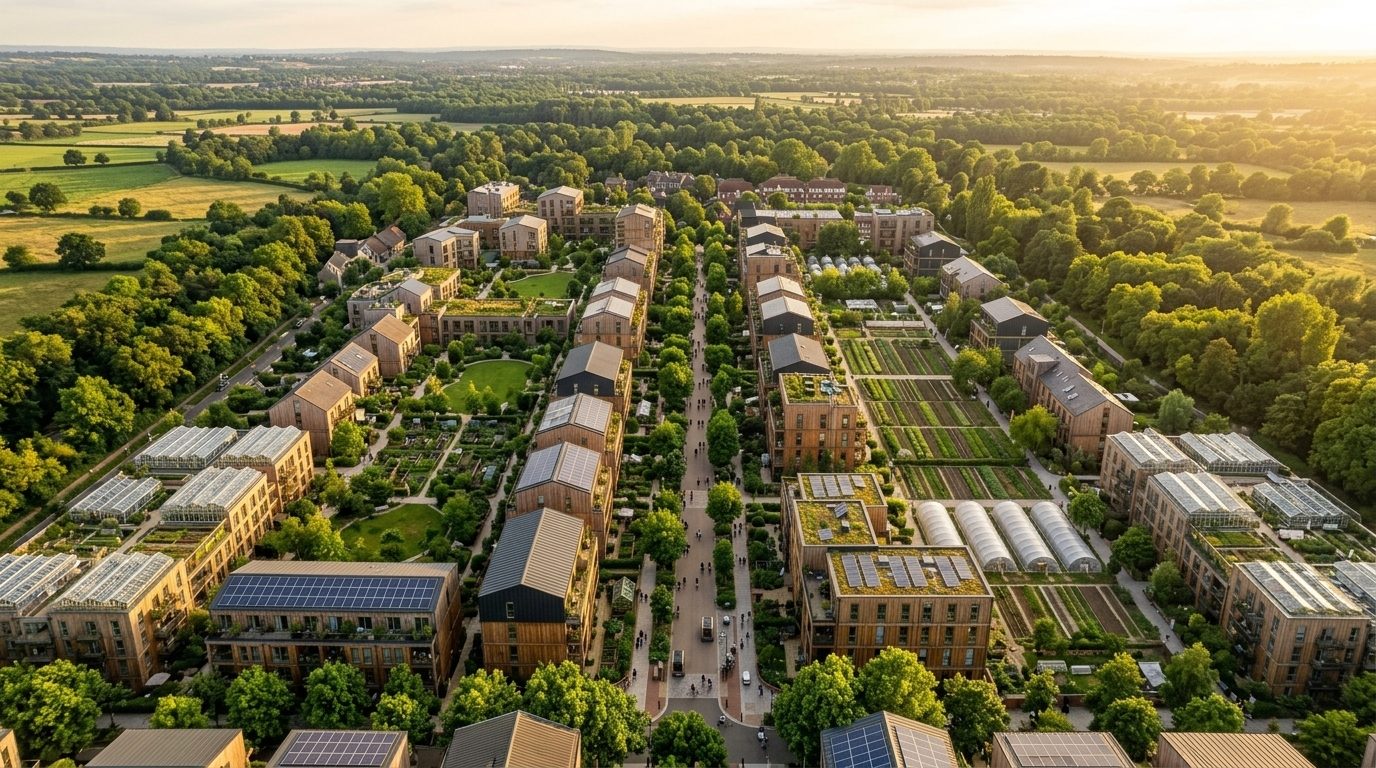
Prototype 01
The grown city, in plan.
A walkable core of clustered timber housing, ringed by the systems that feed it — energy, food, water and work held inside a single footprint.
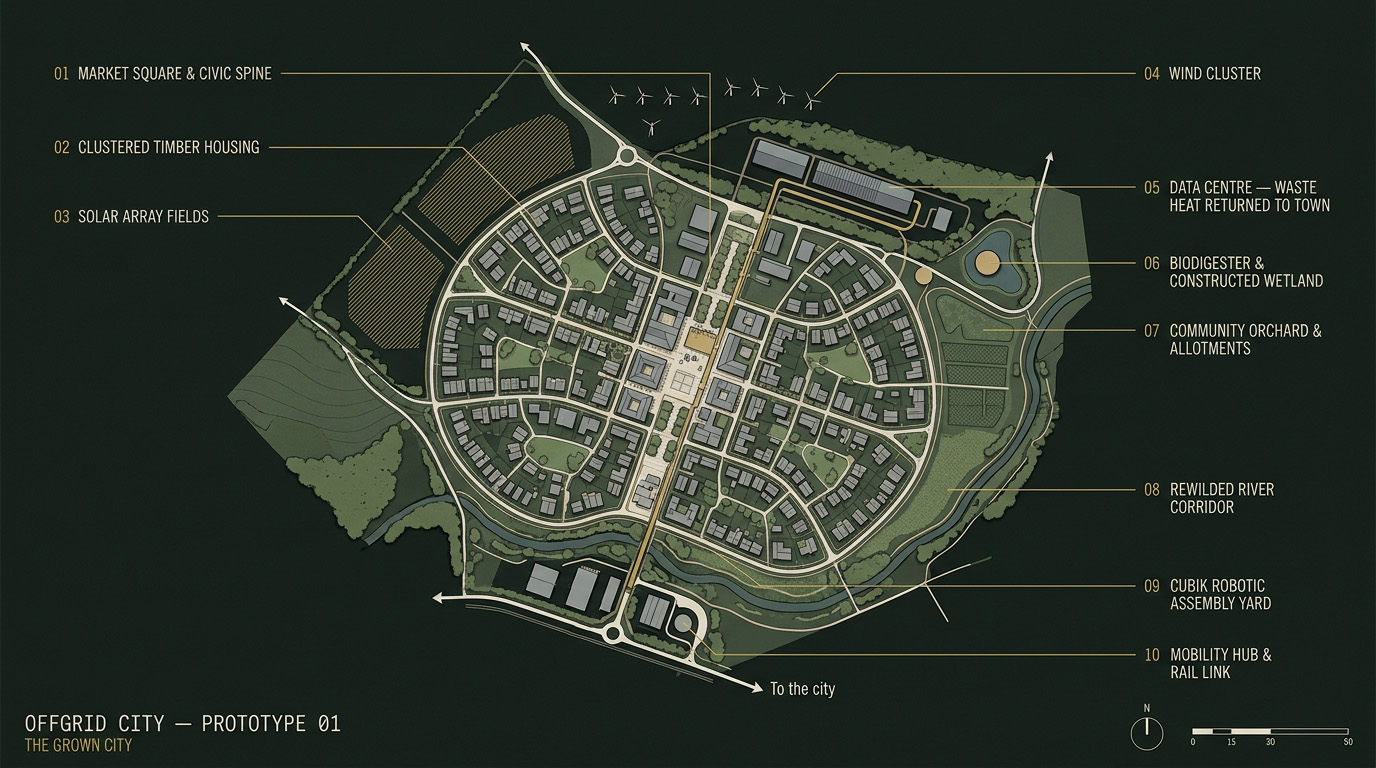
Offgrid City · Prototype 01 · Undisclosed site, UK
Not built and left dependent on the grid — grown, and left self-sufficient. A place engineered to make more energy than it uses, more habitat than it takes, and more security than it costs to live in.
A grown city provides, from within its own footprint, the essentials a person needs to live: energy, food, shelter, work and care.
It is walkable end to end, richly connected to the cities beyond it, and adaptable enough to outlive the uses it was built for. Nothing here is poured and forgotten — every part is designed to be reconfigured, re-purposed, or taken back apart as the city's needs change.
The result is a neighbourhood that doesn't just consume less — it gives back: surplus power to the wider region, richer ecology than it displaced, and a genuine floor of security for the people who live in it.
A walkable core of clustered timber housing, ringed by the systems that feed it — energy, food, water and work held inside a single footprint.
Rooftop solar, shared wind, and biodigesters running on waste from the city's own urban farms generate far more energy than the neighbourhood consumes. Homes are net energy-positive by design.
The energy surplus is sold as premium, always-on power to neighbouring data centres — and their waste heat is piped straight back to warm the homes. Nothing is wasted twice.
Rain gardens, wild verges, green roofs and native planting are laid out for measurable biodiversity net gain — the site's ecology is richer after building than before it.
The masterplan is designed for disassembly. When space-based or quantum computing makes today's data centres obsolete, the same structures reconfigure into housing, schools or hospitals.
When the essentials are produced where you live, losing a job — or a government losing the ability to fund a safety net — no longer means losing your means to survive. Food, energy, shelter and care sit inside the built environment itself. Work becomes a choice about contribution, not a condition of staying alive — and the enterprise that follows is the city's organic engine of jobs.
The whole city is reachable by foot or bike along car-free streets, served by autonomous shuttles and delivery robots. Fast links to the central cities keep it plugged into the wider economy: close enough to commute, complete enough not to need to.
Waste feeds energy. Energy feeds homes. The surplus feeds the grid and the data centres. Their heat comes back to the homes. And the revenue from that surplus feeds the mortgage — until the home is owned outright.
Every output is someone else's input. That is what makes it grown rather than built.
Designed so that keeping a roof over your head is never contingent on keeping a job.
Each home's energy surplus is sold to the grid and to data centres. That revenue is designed to cover the mortgage — so residents live with their essential costs met from day one.
Across the term, the home pays itself off. At the end of it, the resident owns their home free and clear — an appreciating, energy-producing asset, not a lifetime of rent.
Freed from the cost of survival, people are free to create — companies, craft, enterprise — backed by shared co-working space, decentralised education and decentralised healthcare on the doorstep.
Offgrid City Prototype 01 · in development · built with CUBIK® · patent-pending